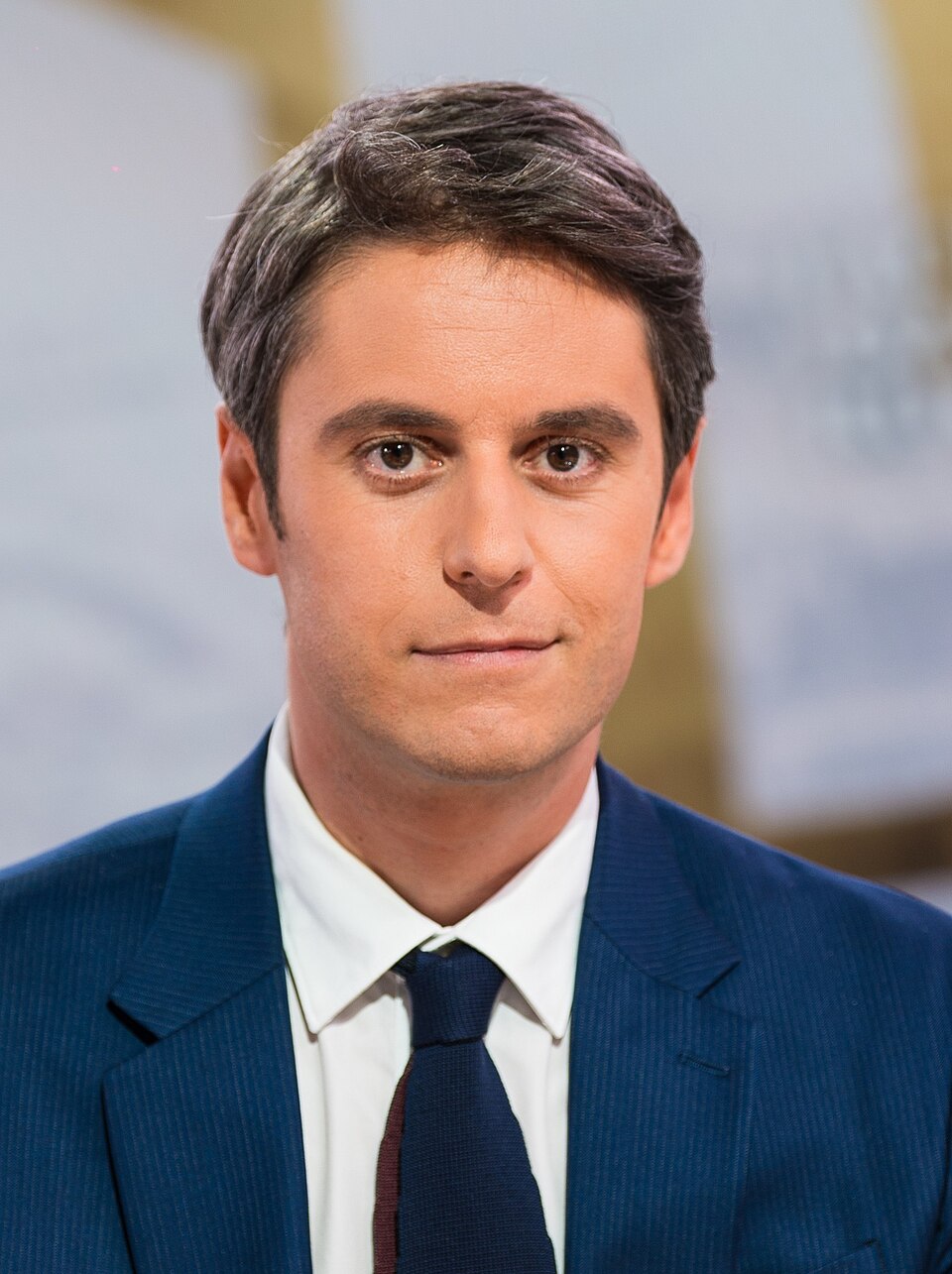
Introduction: Gabriel Attal and France's Shifting Political Landscape
In the tumultuous arena of French politics, few figures have captured public attention quite like Gabriel Attal. His meteoric rise, culminating in his appointment as France's youngest-ever Prime Minister at just 34, has fundamentally reshaped the discourse around leadership and ambition within the Fifth Republic. As France grapples with a period of significant political restructuring following parliamentary dissolution, Attal is increasingly seen as positioning himself not just for domestic influence, but for a potentially transformative attal position internationale - Article 2.
The current political climate in France, described by some as a "field of ruins" post-dissolution, provides a fertile ground for ambitious individuals to propose a new vision. Attal, with his six years of government experience and a rapidly accumulating political capital, appears to be doing just that. He is meticulously cultivating an image designed to appeal to a society he perceives as desiring "radicality" – a firm hand on issues ranging from security and justice to immigration. This calculated pivot, while primarily focused on the domestic landscape and the looming 2027 presidential election, inherently influences and defines his developing attal position internationale.
Attal's Ascent: A New Face for French Leadership
The Youngest Prime Minister: A Historic Appointment
Gabriel Attal’s journey to the pinnacle of French executive power is a compelling narrative of rapid ascent. Appointed by President Emmanuel Macron amidst a cabinet reshuffle aimed at invigorating his government, Attal's youth at 34 made him a historical figure overnight. Beyond his age, his status as the first openly gay official to hold the prestigious prime ministerial role further underscores a significant moment for French representation and progressiveness on the global stage.
- Early Political Engagement: Attal joined the Socialist Party at 17, demonstrating an early and strong commitment to public service. His rapid climb through political ranks speaks volumes about his aptitude and determination.
- Key Role in Government: Prior to his premiership, Attal held several junior ministerial roles, gaining crucial experience in various policy areas. This hands-on experience has equipped him with an intimate understanding of governmental machinery and policymaking.
- Implementing Domestic Policies: As Prime Minister, Attal is directly accountable to parliament, tasked with the vital role of implementing domestic policies, particularly economic measures, and coordinating his team of ministers. This executive experience is invaluable for anyone eyeing the top job.
His distinctive profile – youth, experience, and an openly modern identity – naturally contributes to France's image abroad. It suggests a nation willing to embrace change and new leadership, a subtle yet potent element of France's soft power and therefore his evolving attal position internationale.
Crafting a Domestic Platform: The Path to Power
Attal's immediate focus, however, remains squarely on the domestic front, with the 2027 presidential election firmly in his sights. He views himself as the natural successor to lead the "central bloc," a position currently contested by figures like Edouard Philippe, with whom polls suggest a narrowing gap. To solidify this claim, Attal has strategically adopted tougher stances on key societal issues:
- Security and Justice: Advocating for firmer measures and stricter enforcement, aiming to address public concerns about law and order.
- Immigration: Taking a more robust stance, aligning with a perceived shift in public sentiment towards greater control and regulation.
This calculated move, driven by the belief that French society yearns for "radicality," risks alienating the left wing of his own political party. Yet, it underscores a readiness to challenge traditional ideological boundaries in pursuit of broader appeal. This domestic maneuvering, while internal, is watched closely by international observers keen to understand the future trajectory of French governance and its potential impact on European stability and global diplomacy.
Projecting France's Future: Attal's International Stance
While the immediate context of Attal's actions points towards a domestic power play, any potential presidential candidate in France inherently begins to shape their attal position internationale. A leader's domestic policy, particularly on sensitive issues like immigration and security, often resonates far beyond national borders. For Attal, this means navigating a complex landscape where his internal strategies could have significant external ramifications.
- European Union Dynamics: France's role within the EU is pivotal. Attal's tough stances, particularly on immigration, could signal a potential shift in France's approach to EU-wide policies, impacting debates on border control, asylum, and shared security. A more 'radical' French stance could influence the broader European discourse, either reinforcing existing trends or sparking new debates among member states.
- Global Image and Diplomacy: A young, dynamic leader like Attal could project an image of a modern, forward-looking France on the global stage. His youth might allow him to forge connections with a new generation of international leaders, potentially refreshing diplomatic approaches. However, domestic political instability or perceived internal divisions could undermine France's ability to project a unified and strong voice in international forums.
- Impact on France's Soft Power: France traditionally relies on its cultural influence and diplomatic leadership. Attal's emphasis on security and national identity, while appealing domestically, will need careful calibration to ensure it doesn't detract from France's universalist values and its role as a champion of human rights and cultural exchange globally.
For aspiring leaders, it's a critical balancing act: satisfying domestic constituencies while maintaining a credible and respected international posture. Attal's future capacity to represent France effectively on the world stage will depend significantly on his ability to consolidate power at home and articulate a coherent vision that transcends national boundaries.
Navigating Internal Divisions and External Perceptions
The Challenge of Unifying the Central Bloc
Despite his ambition and undeniable talent, Attal faces considerable internal resistance. His strategy and political line are not universally embraced, neither within the broader central political space nor, crucially, within his own party. Critics, including former Prime Minister Elisabeth Borne, have openly denounced his approach as driven by personal ambition rather than collective spirit. This friction is a significant hurdle for his attal position internationale, as internal dissent can weaken a leader's credibility both at home and abroad.
The sentiment that "a party should be a collective and not a tool of personal communication" highlights the core of the criticism. Leaders who are perceived as overly focused on self-promotion may struggle to build the broad consensus necessary for effective governance, let alone for projecting a cohesive national image internationally. Such internal squabbles can make a country appear less stable or predictable to international partners and investors.
The Communication Strategy: Risks and Rewards
Attal's perceived "tendency permanent au coup de com'" (constant communication stunts) is another point of contention. While effective in grabbing headlines and maintaining public visibility, this approach carries risks. It can lead to accusations of superficiality or a lack of substantive policy, potentially undermining long-term trust. Furthermore, his perceived "rupture" with President Macron – to whom he largely owes his initial political rise – has caused significant unease among allies. This perceived disloyalty, exemplified by the planned rebranding of Macron's party to "Nouvelle République," suggests a strategic distancing, but also a potential fracture at the heart of the central bloc.
The upcoming launch of Attal's first book after the municipal elections, a traditional launchpad for presidential campaigns, along with major public meetings like the one at Palais Brognard, are clear signals of an accelerating campaign strategy. These are not merely domestic political events; they are performative acts that contribute to shaping perceptions of France's future leadership. International media and political analysts will be scrutinizing these moves, looking for signs of either national unity and strength or fragmentation and uncertainty. The success of his communication strategy in projecting confidence and coherence will be key to solidifying his attal position internationale - Article 3.
Conclusion: The Road Ahead for Attal and France
Gabriel Attal stands at a pivotal juncture in French politics, with his actions and aspirations holding significant implications for the nation's future trajectory, both domestically and on the world stage. His bold stances, strategic maneuvering, and ambitious push for the 2027 presidency are undeniably shaping his attal position internationale. While confronting internal party dissent and the complex task of uniting a fractured political landscape, his rise has already brought a youthful and distinct profile to French leadership. The coming months, particularly with the publication of his book and his public engagements, will be crucial in determining whether he can effectively consolidate his domestic base and translate his personal ambition into a compelling vision for France's role in a rapidly changing global order. His success in balancing domestic radicality with international diplomacy will ultimately define not just his political future, but potentially, a significant chapter in France's ongoing story.